Energy Audit

Energy Saving Measures & Audit

Power Quality Profiling, Bill Optimization & Energy Conservation Roadmaps

Discuss this service
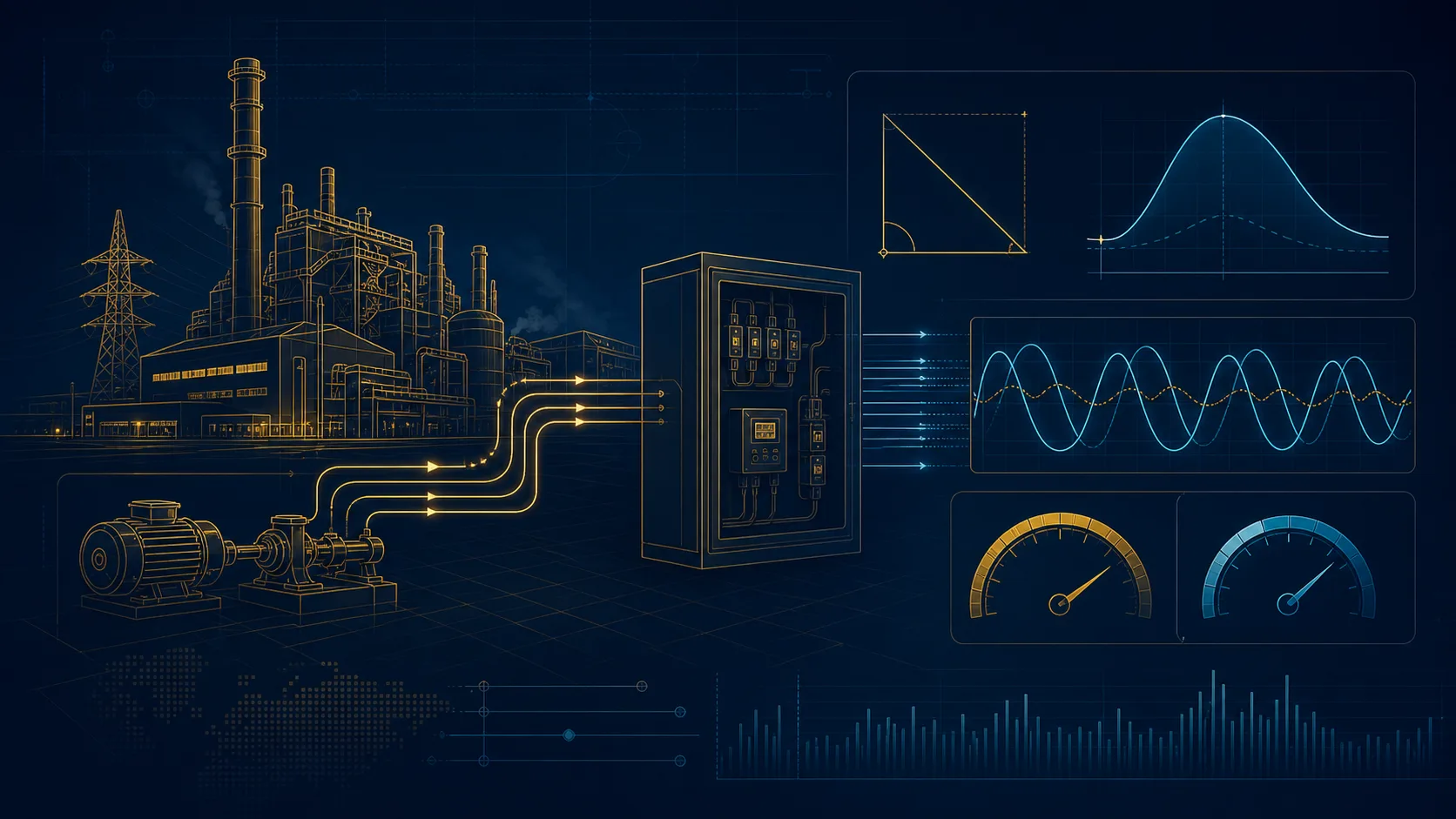
Illustrated industrial energy-flow and power-quality analysis

Overview

Engineering scope built around the project

Electrical energy represents a substantial portion of operational expenses for industrial manufacturing and commercial facilities in Maharashtra. DV Consultancy Services provides comprehensive electrical energy audits to help identify energy losses, inefficient equipment operation, and power quality penalties.

Our engineering team uses power quality analyzers and diagnostic tools to record real-time operational parameters, assess transformer and motor loading, and evaluate auxiliary subsystems such as pumping and compressed air.

We assist consumers in maintaining optimal power factor levels to capture applicable utility tariff incentives under regulatory guidelines while reducing unneeded electrical demand.

Technical scope

What the engagement may cover

1. Tariff & Power Factor Optimization

  • Review of historical 12-month utility electricity bills to identify consumption trends and Time-of-Day (TOD) usage.
  • Evaluation of power factor maintenance to optimize eligible utility tariff incentives.
  • Assessment of recorded Maximum Demand versus Sanctioned Contract Demand to avoid demand penalties.

2. Power Quality & Harmonics Logging

  • Continuous electrical logging recording Active (kW), Reactive (kVAr), and Apparent (kVA) power.
  • Measurement of Total Harmonic Distortion for voltage (THD-V) and current (THD-I) referenced to IEEE 519 limits.
  • Assessment of transformer losses and neutral currents caused by harmonic content.

3. Motor & Drive System Evaluation

  • Evaluation of motor operating load factors to identify underloaded or oversized machines.
  • Feasibility review for retrofitting energy-efficient (IE3/IE4) motors on high-runtime machinery.
  • Feasibility analysis of Variable Frequency Drives (VFD) on variable-torque pumps and fans.

4. Auxiliary Systems & Renewable Integration

  • Lighting system lux level assessment and transition recommendations for energy-efficient LED luminaires.
  • Specific power consumption estimation for compressed air and pumping networks.
  • Preliminary technical assessment for rooftop solar photovoltaic net-metering integration.

A clear engineering process

01

Historical Billing Review

Analysis of utility billing data, single-line diagrams, operating schedules, and major equipment nameplates.

02

On-Site Power Logging

Installing power quality analyzers and measurement tools to record active production cycles.

03

Technical & Financial Evaluation

Computing energy balances, identifying specific conservation measures, and calculating estimated payback periods.

04

Report Delivery & Action Plan

Presenting a formal energy audit report with prioritized recommendations and technical implementation guidance.

Standards and project context

References below guide the technical conversation. The final applicable standards, authority requirements and issue dates must be confirmed for each project.

  • Applicable Energy Audit Guidelines
  • IEEE 519: Recommended Practice for Harmonic Control in Electric Power Systems
  • IS 13340 / IS 13341: Power Factor Capacitors
  • Applicable State Electricity Regulatory Commission (MERC) Tariff Guidelines

Common client contexts

Manufacturing & Engineering FacilitiesCommercial Complexes & Office BuildingsCold Storage & Agro-Processing UnitsHospitals & Healthcare CentersEducational Institutions & Campuses

Frequently asked questions

How does maintaining a high power factor benefit electricity consumers in Maharashtra?

Under MERC tariff regulations, MSEDCL offers power factor incentives for high-tension consumers maintaining a monthly average power factor above 0.95, while penalizing low power factor. Maintaining power factor close to unity can yield measurable monthly tariff savings.

What is the typical timeframe for an electrical energy audit?

A standard walkthrough audit and power logging period typically spans 2 to 4 days on-site depending on plant complexity, followed by data analysis and final report preparation within 1 to 2 weeks.

Does an electrical energy audit disrupt active factory operations?

No. Power quality analyzers and measurement probes are connected non-intrusively without interrupting active plant operations, allowing measurements to be captured under standard production conditions.

Related services

Residential

Residential Electrical Design

Engineered, energy-efficient, and IS 732-compliant electrical layouts and single-line diagrams for residences, villas, and housing societies.

  • Connected & Maximum Demand Load Calculations
  • Internal Conduit, Lighting & Power Point Layouts
  • Main Distribution Board (MDB) & Sub-DB Schematic SLDs
Explore service
Commercial

Commercial Electrical Design

High-reliability power distribution, backup generator synchronization, and life-safety electrical schemes for commercial and healthcare facilities.

  • Substation Layout & Dual Incomer Switchboard Schematics
  • Standby Generator (DG) & UPS Synchronization Schemes
  • Isolated Power Supply (IPS) Concepts for Critical Care Areas
Explore service
Industrial

Industrial Electrical Setup

HT substation design (up to 33kV), Motor Control Centers (MCC), power factor correction systems, and heavy-duty industrial earthing.

  • 11kV / 33kV Outdoor Yard & Indoor Substation Layouts
  • Power & Distribution Transformer Sizing Specifications
  • Vacuum Circuit Breaker (VCB) & HT Protection Schemes
Explore service
Project conversation

Need help planning energy saving measures & audit?

Share the project stage, available drawings and site constraints. We will use that context to frame the next engineering step.

Discuss your requirement