Breakdown Analysis

Breakdown Analysis & Corrective Measures

Failure Investigation, Protection Review & System Hardening

Discuss this service
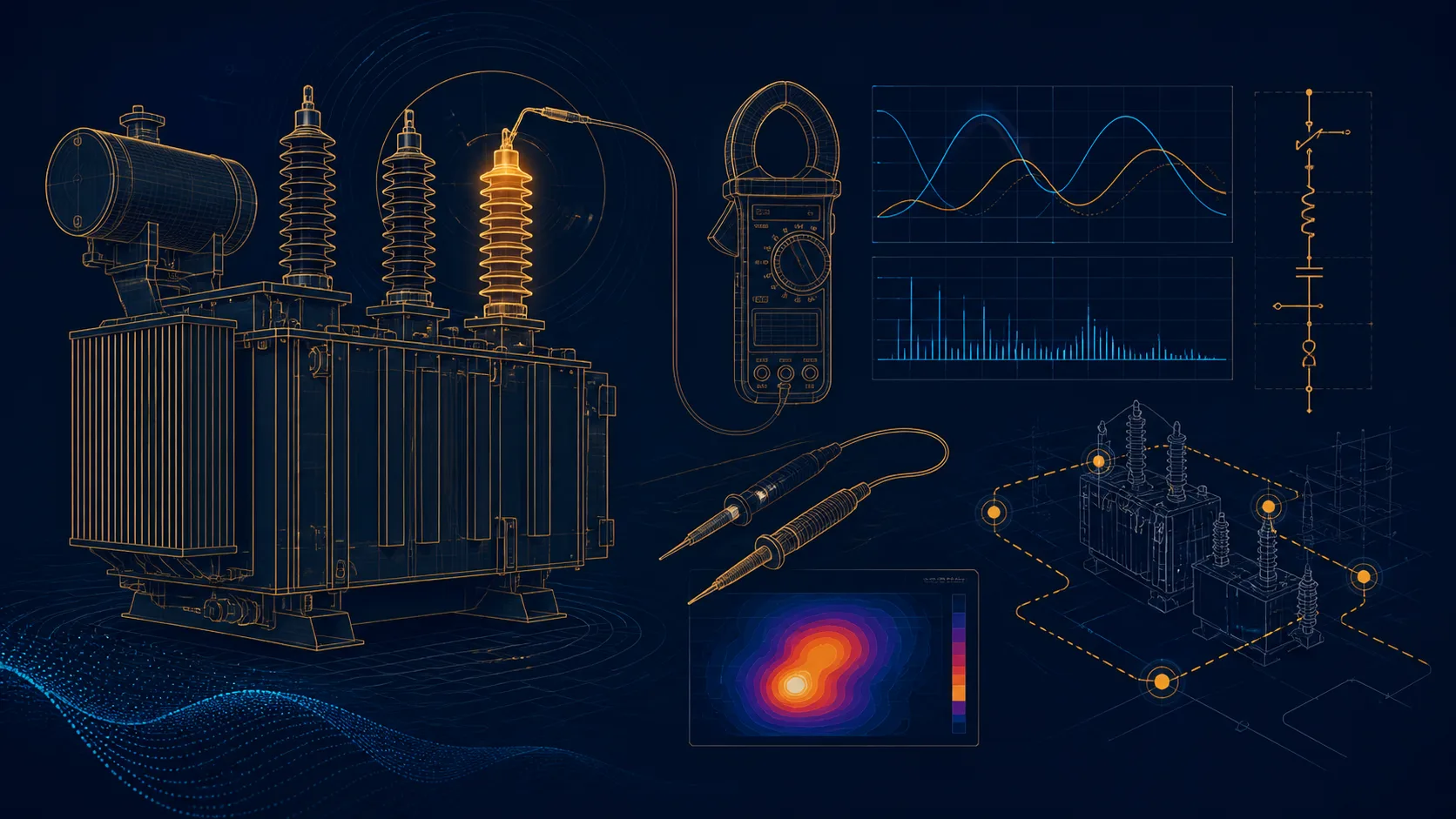
Illustrated transformer testing and electrical diagnostic measurements

Overview

Engineering scope built around the project

When major electrical equipment trips repeatedly or suffers unexpected insulation failure, simply replacing components without addressing the underlying cause frequently leads to repeat breakdowns and costly downtime. DV Consultancy Services provides technical failure investigations across Nagpur and Maharashtra.

Our electrical consultants perform Root Cause Analysis (RCA), analyzing relay disturbance records, sequence of events (SOE), transient overvoltages, thermal stresses, and load profiles.

We identify the root factor—such as harmonic resonance, improper protection relay curves, voltage surges, or earthing degradation—and provide actionable engineering recommendations to help stabilize operations.

Technical scope

What the engagement may cover

1. Failure Investigation & Event Analysis

  • Visual and physical inspection of damaged windings, contact surfaces, or failed capacitor units.
  • Download and analysis of numerical protection relay event records and fault current magnitudes.
  • Post-fault insulation resistance and winding resistance measurements on affected equipment.

2. Power Quality & Disturbance Logging

  • Deployment of power quality analyzers to record voltage sags, swells, and transient events.
  • Total Harmonic Distortion (THD-V and THD-I) spectrum measurement across operating cycles.
  • Assessment of parallel resonance frequencies between supply transformers and power factor capacitors.

3. Protection Coordination & Selectivity Review

  • Review of upstream and downstream Time-Current Characteristic (TCC) curves for breakers and relays.
  • Adjustment of instantaneous and time-delayed overcurrent/earth fault settings to avoid nuisance tripping.
  • Verification of trip circuit supervision and auxiliary control wiring.

4. Corrective System Hardening

  • Engineering specifications for retrofitting detuned harmonic filter reactors or surge suppressors.
  • Evaluation of neutral conductor sizing in the presence of triplen harmonic currents.
  • Formulation of standard operating procedures (SOPs) for maintenance and emergency recovery.

A clear engineering process

01

Site Inspection & Evidence Gathering

On-site inspection to review physical damage, collect relay event logs, and inspect operating conditions.

02

Diagnostic Measurements

Performing targeted electrical tests, including insulation resistance, winding checks, and power quality logging.

03

Technical Analysis & Root Cause Determination

Analyzing data against electrical design limits, simulating fault conditions, and identifying the primary failure mechanism.

04

Corrective Action Roadmap

Delivering an engineering report with prioritized corrective steps, updated relay settings, and retrofit guidelines.

Standards and project context

References below guide the technical conversation. The final applicable standards, authority requirements and issue dates must be confirmed for each project.

  • IEEE 519: Recommended Practice for Harmonic Control in Electric Power Systems
  • IEEE 1415: Guide for Induction Machinery Maintenance Testing
  • IS 13947: Low-Voltage Switchgear and Controlgear
  • CEA Regulations (Measures Relating to Safety and Electric Supply)

Common client contexts

Continuous Process ManufacturingChemical & Pharmaceutical UnitsSteel & Metal Fabrication PlantsCold Storage & Commercial WarehousesCommercial Towers & Data Centers

Frequently asked questions

Why do industrial motors experience repeated tripping despite overload relays?

Common factors include voltage unbalance across phases, harmonic heating from variable speed drives, repetitive mechanical overloading, high ambient temperatures, or incorrect relay setting curves that do not match the motor thermal capacity.

What is Root Cause Analysis (RCA) in electrical engineering?

RCA is a structured engineering process that moves beyond superficial symptoms (such as a blown fuse or tripped breaker) to identify the underlying failure mechanism (such as harmonic resonance, improper protection timing, or voltage transients) to prevent recurring failures.

How can power factor capacitor banks contribute to electrical failures?

If capacitor banks are installed without appropriate detuning reactors on a network containing non-linear loads, parallel resonance can occur. This amplifies harmonic voltages, causing excessive current through capacitors, breaker tripping, and elevated voltage stress on adjacent equipment.

Related services

Residential

Residential Electrical Design

Engineered, energy-efficient, and IS 732-compliant electrical layouts and single-line diagrams for residences, villas, and housing societies.

  • Connected & Maximum Demand Load Calculations
  • Internal Conduit, Lighting & Power Point Layouts
  • Main Distribution Board (MDB) & Sub-DB Schematic SLDs
Explore service
Commercial

Commercial Electrical Design

High-reliability power distribution, backup generator synchronization, and life-safety electrical schemes for commercial and healthcare facilities.

  • Substation Layout & Dual Incomer Switchboard Schematics
  • Standby Generator (DG) & UPS Synchronization Schemes
  • Isolated Power Supply (IPS) Concepts for Critical Care Areas
Explore service
Industrial

Industrial Electrical Setup

HT substation design (up to 33kV), Motor Control Centers (MCC), power factor correction systems, and heavy-duty industrial earthing.

  • 11kV / 33kV Outdoor Yard & Indoor Substation Layouts
  • Power & Distribution Transformer Sizing Specifications
  • Vacuum Circuit Breaker (VCB) & HT Protection Schemes
Explore service
Project conversation

Need help planning breakdown analysis & corrective measures?

Share the project stage, available drawings and site constraints. We will use that context to frame the next engineering step.

Discuss your requirement