
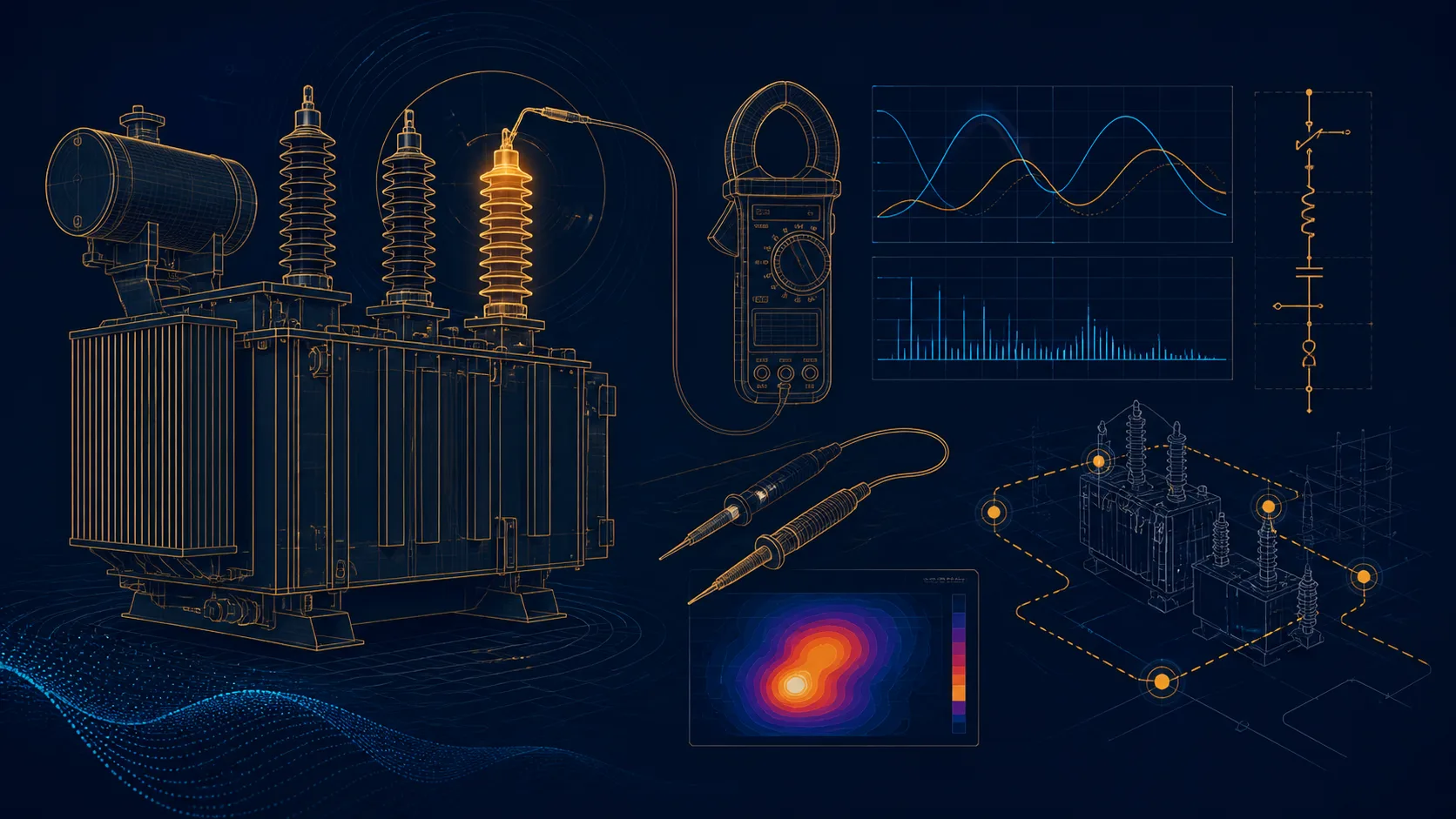
DGA is one part of a condition picture
Dissolved gas analysis examines gases present in transformer insulating oil. Gas patterns and trends can support investigation of thermal or electrical activity, but interpretation should consider transformer design, service history, loading and previous results.
Sampling quality comes first
A poor sample can undermine a sophisticated laboratory analysis. Use suitable containers and sampling procedures, avoid air contamination, record oil temperature and equipment condition, and maintain traceable identification from the transformer to the report.
Trend before alarm
A single result may justify follow-up, but trends are often more informative. Compare with earlier samples, relevant guidance and the transformer manufacturer’s information. Rapid change can be more significant than a stable elevated value.
Combine evidence
- Loading and temperature history
- Protection events and alarms
- Oil quality and moisture tests
- Electrical tests appropriate to the equipment and outage opportunity
- Visual inspection and maintenance history